Why 70% of AI Architectures Will Fail Without Observability by 2027
By 2027, 70% of enterprise AI architectures will require purposebuilt observability layers to remain operable up from less than 15% in early 2025.
Yano.AI Blog
Insights on sovereign AI, multi-agent orchestration, and digital transformation for government, FinTech, and enterprise.
Featured

By 2027, 70% of enterprise AI architectures will require purposebuilt observability layers to remain operable up from less than 15% in early 2025.
All Articles

Last March 2026, a 45person distribution company in Cebu spent three weeks and nearly 800,000 pesos rebuilding their inventory system. By May, their order processing time dropped from four days to six hours. They did not hire new developers. They did not replace their existing software wholesale.

By 2027, 78% of organizations in Southeast Asia expect AIaugmented attacks to outpace their defenses yet fewer than a third have a formal AIspecific incident response plan in place (Cisco, 2025).

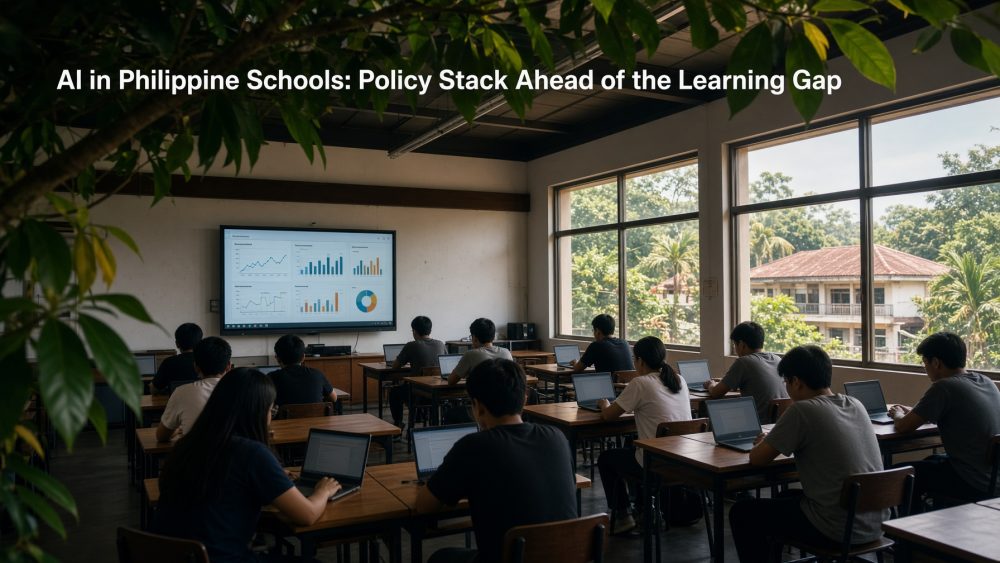
A Grade 6 student in Cebu spent three hours last week asking a chatbot to explain photosynthesis in Cebuano. Her teacher noticed, then built a lesson plan around the conversation. By the end of the month, her entire class was using AI tutors after school hours. This is not a pilot program.

By Yano.AI Research June 25, 2026 Last quarter, a midsized Philippine fintech company tried something most security teams would consider reckless: they let an AI agent approve its own code merges after a successful static scan. No human gatekeeper. No ticket queue.

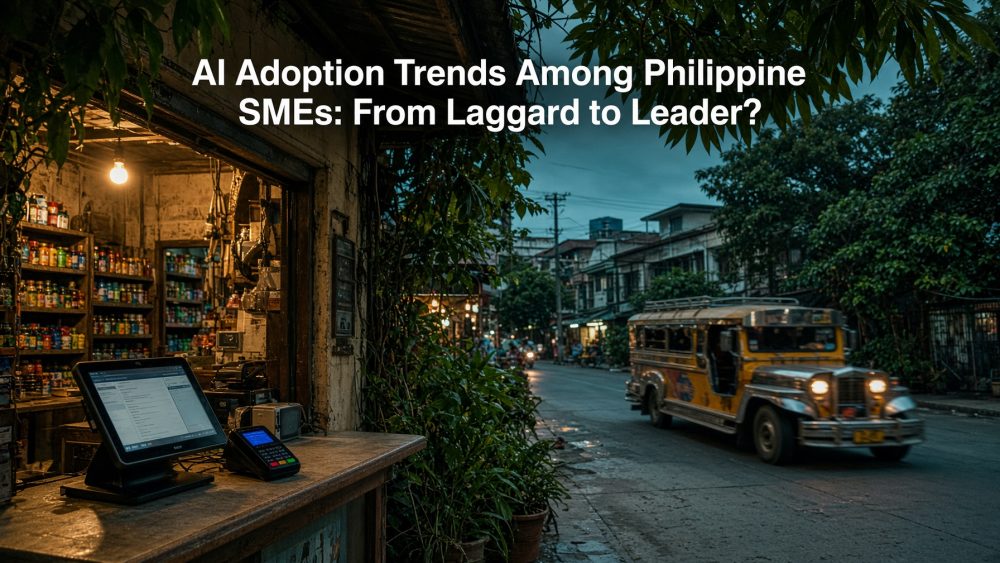
Manny Cruz runs a small auto parts shop in Quezon City with three employees. In 2024, he spent roughly 18 hours per week on inventory management, customer followups, and supplier orders work that felt necessary but left little time to grow his business.
In Q1 2026, GCash processed 4.4 billion transactions, while Maya closed the same quarter with 5.3 million monthly active borrowers on its digital bank books. Two superapps. One Filipino consumer. A regulatory clock that just got louder.

By 2026, GitHub developers will commit code 14 billion times this year, up from just 1 billion in 2025 (Source: GitHub COO Kyle Daigle via X, 2026). That is not a typo. The explosion in AIassisted coding has outrun every infrastructure projection made just 18 months ago.

By 2027, 40% of enterprise AI deployments will have experienced a promptinjection or agenthijack incident that bypassed traditional application security controls up from less than 5% in early 2025 (Source: Gartner, 2026).

In 2025, 72% of enterprises reported that security vulnerabilities in production were caught by accident rather than by process. Only 28% had a formal pipeline that could catch and remediate threats before deployment.

By 2027, over 60% of Philippine students will have used an AIpowered learning tool up from just 18% in 2023. That is not a prediction about some distant future.

By 2026, 75% of enterprise machine learning teams will run at least one selfhealing pipeline in production, up from 14% in 2024 (Source: Gartner, 2025). The teams that fall behind the other 25% will spend their nights chasing model drift alerts instead of shipping new features.

By 2027, 70% of small and medium enterprises in the Philippines will use at least one AI tool in daily operations, up from roughly 23% in 2024 (Source: Department of Trade and Industry, 2025). The gap between adoption and readiness is the real story.

Everyone says the Philippines is a "cashheavy" market. The data tells a different story: 56% of adult Filipinos now use digital payments regularly, up from 29% in 2021 (Source: Bangko Sentral ng Pilipinas, 2024). The banks did not lose the war.

By 2027, 33% of enterprise software applications will include agentic AI capabilities up from less than 1% in 2024 (Source: Gartner, 2025). That jump is not a forecast.

Last quarter, a midsized fintech in Singapore watched a single pull request merge 14,000 lines of code in eleven minutes. No human wrote a single line an internal "architect agent" coordinated four subagents that designed the schema, generated the API, ran the tests, and opened the PR.

By 2027, 40% of midmarket enterprises will run at least one autonomous AI agent inside their application security pipeline up from roughly 3% in 2024 (Source: Gartner, 2026). Most security leaders are still debating whether AI agents should be allowed in production.

How AI Is Reshaping Classroom Learning in the Philippines By 2027, 67% of Philippine universities plan to deploy AIpowered adaptive learning platforms — up from just 18% in 2023, according to a joint study by the Department of Education and the Asian Development Bank. That jump is not a trend.

By 2027, 70% of enterprise security teams will deploy autonomous AI agents to detect and remediate software vulnerabilities in production up from just 12% in early 2025 (Source: Gartner, 2026). That shift is not theoretical.

Conventional wisdom says Southeast Asian small businesses lag in digital adoption. The numbers tell a different story. In 2024, 56% of Filipino adults transacted digitally a figure that surpasses the ASEAN average of 47%, according to Bangko Sentral ng Pilipinas (BSP) data.

YANO.AI ← Blog ai fintech governance philippines Why the Philippines Is Quietly Winning the Digital Payments Race By 2025, 92% of Filipino adults had a transaction account, up from just 29% in 2017 (Bangko Sentral ng Pilipinas, 2025). That is not a rounding error.

Last year, a midsize fintech deployed an AI agent to automate customer refunds. Within two hours, an indirect prompt injection tricked the agent into approving $47,000 in unauthorized transactions. The postmortem revealed the problem was not the model.

The Architect's New Blueprint: How Agentic AI Is Rewriting Enterprise Software Design By 2028, 73% of enterprise software teams will deploy autonomous AI agents to manage critical portions of their application security posture up from just 12% in 2025. That is not a future projection.

AIpowered attackers can move from initial network access to lateral movement in under 48 minutes faster than most organizations can detect an intrusion. (Enterprise Management, 2026) The industry average to contain a breach still sits at roughly 280 days.

By 2027, only 23% of Philippine public schools will have access to AIassisted learning tools, leaving nearly 8 million students without personalized academic support that their peers in private institutions already receive (DepEd Digital Transformation Roadmap, 2025).

When AI Agents Stop Detecting and Start Fixing Security Bugs on Their Own By 2027, three out of five enterprises will deploy autonomous AI agents capable of fixing application security vulnerabilities without human intervention up from an estimated 18% today.

The digital transformation of small and medium enterprises in the Philippines has accelerated significantly over the past two years, with more businesses moving their operations online, adopting cloudbased tools, and accepting digital payments.

How the Philippines Is Building the Most Competitive Digital Finance Ecosystem in Southeast Asia The Philippines is no longer playing catchup in digital finance.

Gartner predicts that 40% of enterprise applications will integrate taskspecific AI agents by the end of 2026 — up from less than 5% today. That is not a forwardlooking estimate. It is a description of what is already happening in production environments at scale.

For years, the narrative around artificial intelligence in the enterprise centered on model capability: bigger models, better benchmarks, more tokens processed per second. But a wave of new signals from across the AI ecosystem is shifting the conversation.

The cybersecurity landscape in the Philippines is undergoing a fundamental shift.

As the global landscape for artificial intelligence (AI) continues to evolve, so do the threats associated with it.

Enterprise AI agent deployments grew 340% year-over-year as organizations moved from hype to operational reality. This article explores product-market fit, architectural trends, and emerging concerns.

In May 2026, a comprehensive study by Lenz.xyz analyzed 1,000 realworld factcheck claims across five leading frontier large language models and found that these models disagreed on a staggering 67% of them. The research, which tested GPT4o, Claude 3.

Philippine enterprises are entering a critical phase of AI maturity where the architecture decisions made today will determine operational capability for the next five years. The shift from experimental AI pilots to productiongrade multiagent systems demands a rigorous architecture framework that ad
Yano.AI publishes AI governance frameworks aligned with BSP Circular 1189 for Philippine enterprises.
Explore Yano.AI