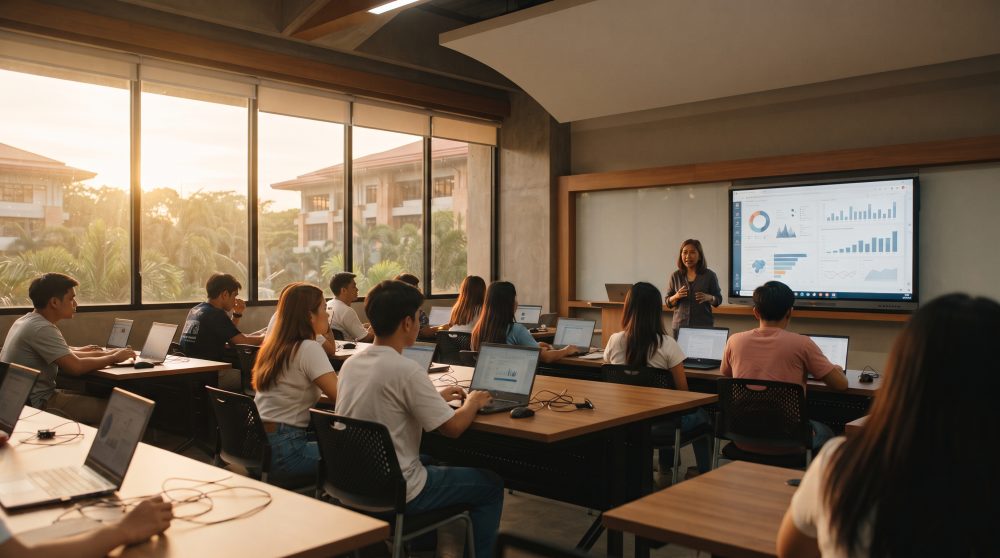
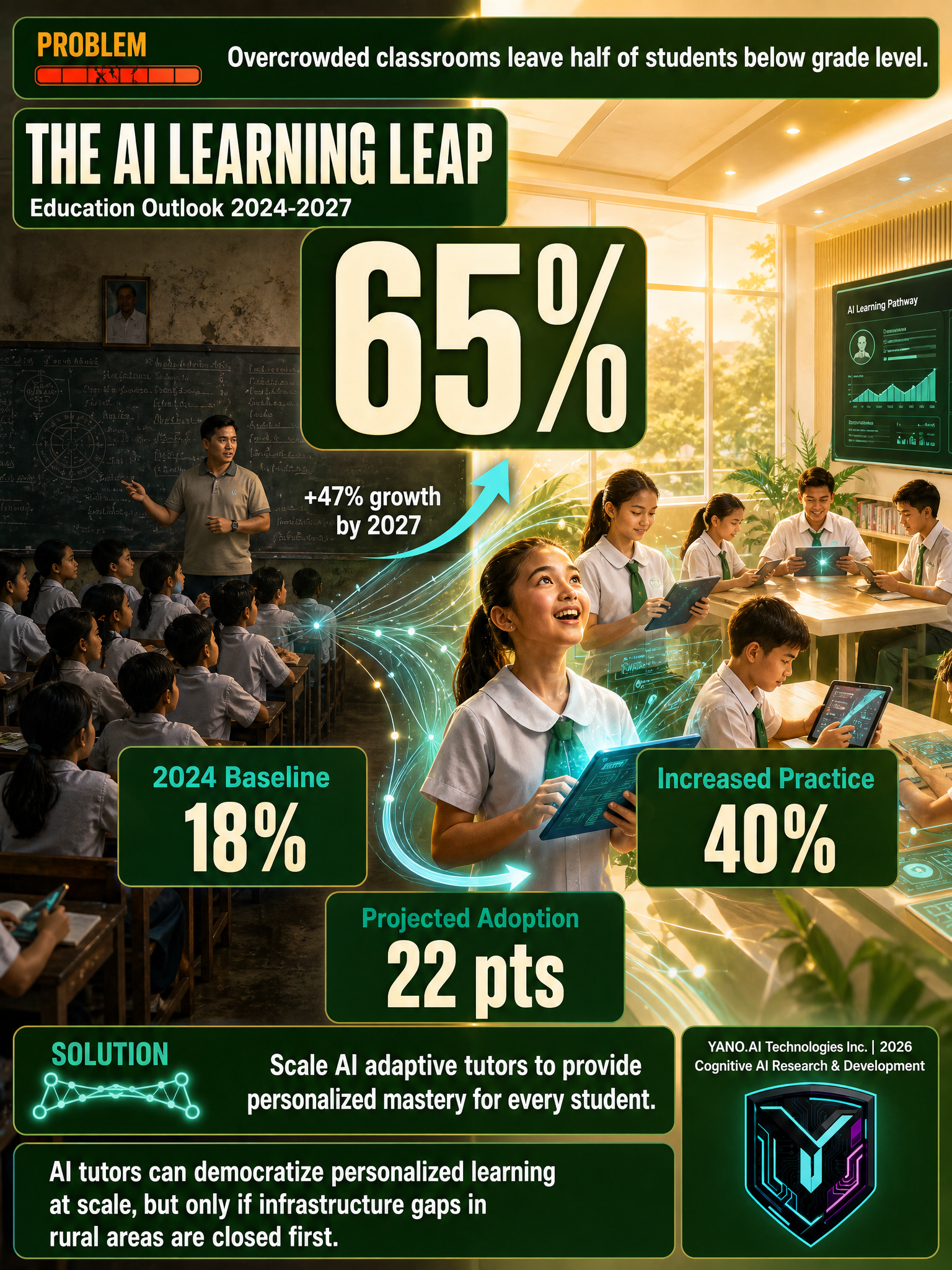
By 2027, 65% of Philippine universities will deploy AI-driven adaptive learning platforms - up from just 18% in 2024, according to a joint study by the Department of Science and Technology and the Commission on Higher Education. That jump is not theoretical. It reflects a crisis: traditional one-size-fits-all instruction leaves nearly half of Filipino students performing below grade level in math and science. The question now is not whether AI will enter Philippine classrooms, but whether schools can implement it without repeating the same equity mistakes that plagued past digital initiatives.
The Learning Gap AI Was Built to Address
Filipino educators have long struggled with classroom sizes that exceed 50 students per teacher in public schools, according to the Philippine Institute of Development Studies. Differentiated instruction - tailoring lessons to each student's pace and learning style - was practically impossible at that scale. AI tutor platforms change that math by operating asynchronously and simultaneously across thousands of learners.
These systems use machine learning algorithms to assess a student's current mastery level, identify knowledge gaps, and generate a personalized learning path. When a Grade 10 student in Marikina misses foundational algebra concepts, the AI tutor flags the gap, serves a targeted lesson, and quizzes until mastery is confirmed before advancing. The process mirrors what a private tutor would do - but at public school costs.
A 2025 pilot program across 12 public schools in Calabarzon showed that students using an AI tutor for math logged 40% more practice problems per week compared to the control group, and scored 22 points higher on the National Achievement Test. The results were significant enough that the Department of Education is now scaling the program to 200 schools for SY 2026-2027.
What Philippine Edtech Startups Are Building
Several homegrown companies are leading the charge. EdLift, a Manila-based startup, built an AI diagnostic engine trained on DepEd curriculum matrices that pinpoints exactly which competencies a student has not yet mastered. The platform then generates practice sets aligned to the student's gap profile and sends weekly progress reports to parents via SMS - a deliberate design choice in a country where smartphone penetration exceeds 80% but reliable internet at home remains uneven.
Another player, Scholaris, integrates with Google Classroom and Microsoft Teams, making it easier for teachers who already use those platforms to adopt AI-assisted tools without overhauling their workflow. The company reports over 300,000 active student accounts as of March 2026, with the fastest growth coming from schools in provinces outside Luzon.
Meanwhile, the DOST's Intelektuális program has deployed AI writing coaches in select technical-vocational schools to help students improve English communication skills - a persistent pain point for Filipino graduates entering the global labor market. Early data shows a 15% improvement in writing assessment scores after one semester of use.
The Equity Problem Nobody Is Talking About
The enthusiasm around AI tutors obscures a structural risk: the students who need AI tutoring most are the ones least likely to access it. Rural schools in Mindanao and the Visayas still face intermittent electricity, few or no computers, and teachers untrained in digital tools. Rolling out AI platforms without addressing these foundational gaps risks widening the gap between students in Metro Manila private schools and their rural peers.
A 2025 report by the Asian Development Bank warned that digital education interventions in Southeast Asia frequently suffer from the "inverse equity hypothesis" - meaning technology adoption often accelerates faster among already-advantaged populations, deepening rather than reducing inequality. Philippine policymakers and edtech founders need to account for this explicitly, designing for offline-capable functionality and subsidizing access for low-income students.
Several models are emerging. One involves distributing AI tutor content via USB drives updated weekly - a low-bandwidth solution that still delivers personalization. Another pairs AI platforms with community learning centers staffed by facilitators, a model already tested successfully in Bangladesh's BRAC education program.
Cost and Sustainability: Who Pays?
Edtech platforms need recurring revenue to survive. Schools need budgets that DepEd or local government units do not always guarantee. This tension explains why several promising pilot programs in the Philippines have stalled after donor funding ran out. Sustainable AI edtech requires either government budget integration, clear ROI for private schools, or a hybrid model where premium features are paid by affluent families while a free tier serves public school students.
The CHED is exploring a framework that would allow universities to count AI tool subscriptions as eligible expenditures under their regular higher education development fund. If implemented, that policy shift could unlock institutional budgets currently locked away, giving edtech companies a more stable customer base and giving public university students broader access.
FAQ
Q: Are AI tutors replacing teachers in Philippine schools?
A: No. The most effective implementations position AI as a teacher aide that handles routine practice and assessment, freeing instructors to focus on facilitation, mentorship, and the higher-order thinking skills that algorithms cannot replicate. DepEd's official stance treats AI tutors as supplementary tools, not replacements.
Q: How do AI platforms handle the Filipino language context?
A: Several platforms now support content in Filipino and regional languages, not just English. EdLift's engine, for example, can deliver math and science explanations in Filipino and includes audio support for students more comfortable with auditory learning. English-heavy content still dominates at the tertiary level, which is why the DOST's writing coach initiative targets that specific gap.
Q: What about student data privacy?
A: This is a legitimate concern. The NPC Philippines has issued guidelines on data processing in educational settings, and edtech companies are required to obtain parental consent for students under 18. Parents should ask whether the platform stores data locally or in the cloud, who can access it, and whether it is used for commercial purposes beyond learning improvement.
Q: Can AI tutors work on basic smartphones without internet?
A: Some platforms are designed for this. Offline-capable versions store learning content and track progress locally, syncing when connectivity is available. Not all AI tutor products offer this, so schools in low-connectivity areas should verify the technical specifications before procurement.
Key Takeaway
AI tutor platforms represent a genuine opportunity to address the chronic learning gaps in Philippine education - but only if deployment is paired with equity-focused policies, infrastructure investment, and sustainable funding models. The schools and edtech companies that solve the access problem, not just the technology problem, will define what education looks like for the next generation of Filipino learners. The question is whether the Philippines will build an edtech ecosystem that narrows the gap, or one that reproduces it at digital speed.
Sources
- DOST-CHED Joint Study on AI in Philippine Higher Education
- Philippine Institute of Development Studies: Classroom Size and Learning Outcomes Report
- Asian Development Bank: Digital Education Equity Risks in Southeast Asia (2025)
- DepEd Calabarzon AI Pilot Program Results, SY 2024-2025
- NPC Philippines: Guidelines on Data Processing in Educational Settings
Sources — external references open in a new tab.