Why Philippine SMEs Are the New Front Line in Cybersecurity
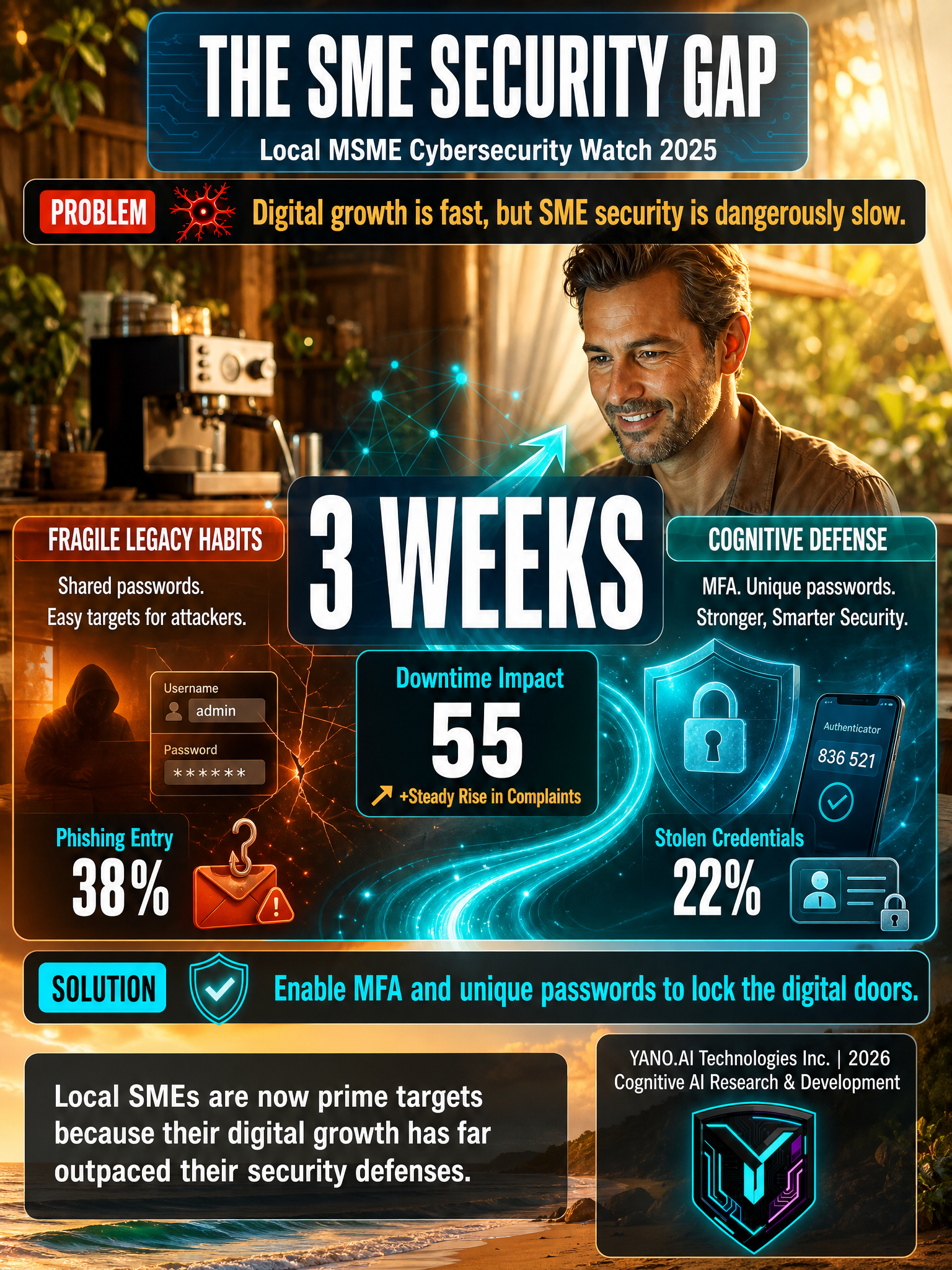
Last quarter, a single phishing email shut down a local retailer's online store for three weeks. By the time the IT team traced the intrusion, customer payment data had already left the country. That story is not an outlier. Small and medium enterprises in the Philippines now face a sharp increase in cyber threats, yet most still operate without basic protections.
The Threat Landscape Has Shifted
Attackers used to target large corporations because those networks held the most valuable data. That changed. Philippine SMEs now store the same payment records, customer databases, and supplier information as bigger firms, but with far weaker defenses. The Philippine National Police reported a steady rise in cybercrime complaints from small businesses, with online shopping scams and business email compromise leading the list (Source: Philippine National Police, 2025).
Small teams also struggle to detect intrusions early. A Verizon study found that 38 percent of small-business breaches began with a phishing email, and another 22 percent started with stolen credentials (Source: Verizon, 2025). Many Philippine SME owners still share passwords across staff accounts or use personal email for business transactions. Those habits create easy entry points for attackers who automate credential stuffing and social engineering at scale.
Why SMEs Are Attractive Targets
Criminals count on small companies reacting slowly. Without a dedicated security team, phishing emails sit unanswered for hours or days. Ransomware groups know that SMEs often pay faster because downtime means missed deliveries and unhappy customers. The ASEAN Secretariat noted that digital adoption across Southeast Asia has outpaced cybersecurity readiness, leaving small businesses especially exposed (Source: ASEAN Secretariat, 2025).
Local digital transformation is accelerating, which widens the attack surface. DTI Nueva Ecija recently hosted a two-day AI and digital tools webinar for fifty-five MSMEs, showing how quickly smaller firms are moving online (Source: DTI Nueva Ecija, 2025). Each new tool, payment gateway, or cloud account adds another door that needs a lock. Many business owners adopt the technology first and ask security questions later.
Practical Defenses That Fit SME Budgets
You do not need an enterprise security stack to raise the cost of attacking you. Multi-factor authentication blocks a large share of credential-based attacks with almost no ongoing expense. Regular backups to an offline drive or separate cloud account reduce ransomware leverage. Employee phishing simulations, even cheap ones, train staff to recognize suspicious messages before they click.
The biggest win is often process change, not software. Split payment approvals between two people. Use a dedicated business email domain instead of free personal accounts. Require unique passwords backed by a password manager. These steps cost little but remove the easiest paths for intruders.
Compliance Is Becoming a Customer Expectation
More clients and partners now ask for basic cybersecurity proof before signing contracts. Government agencies and larger buyers increasingly include data-protection clauses in procurement requirements. The Data Privacy Act already imposes obligations on any business handling personal information, and fines can follow careless breaches (Source: National Privacy Commission, 2024).
SMEs that ignore this gap risk losing B2B relationships before a breach ever happens. Showing even simple controls, like access logs or incident response notes, can become a competitive difference during vendor selection.
FAQ
Q: Do small businesses really need cybersecurity policies?
A: Yes. A short policy covering passwords, backups, and incident response gives staff clear rules and limits damage when something goes wrong.
Q: Is multi-factor authentication worth the hassle for a five-person team?
A: Yes. It blocks most credential-based attacks and takes minutes to set up. The hassle is temporary. The recovery from a breach is not.
Q: What should a business do first if they suspect an intrusion?
A: Isolate affected systems, change shared passwords, and contact a trusted IT provider or the Philippine National Police Anti-Cybercrime Group for guidance.
Key Takeaway
Cybersecurity for Philippine SMEs is no longer optional. The question is whether owners build defenses before an incident or after one. Which control will you enable this week?
Sources
Sources — external references open in a new tab.