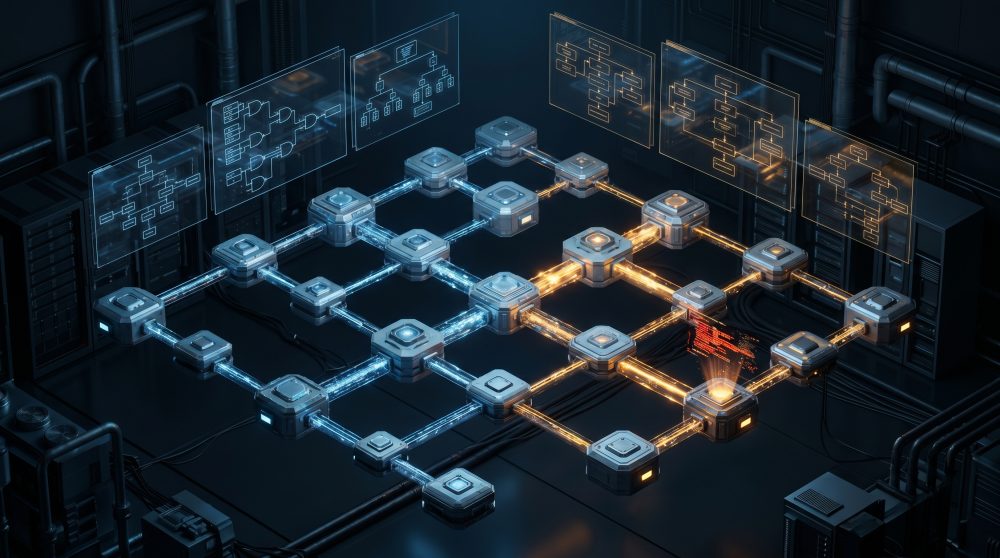
When AI Agents Stop Detecting and Start Fixing Security Bugs on Their Own
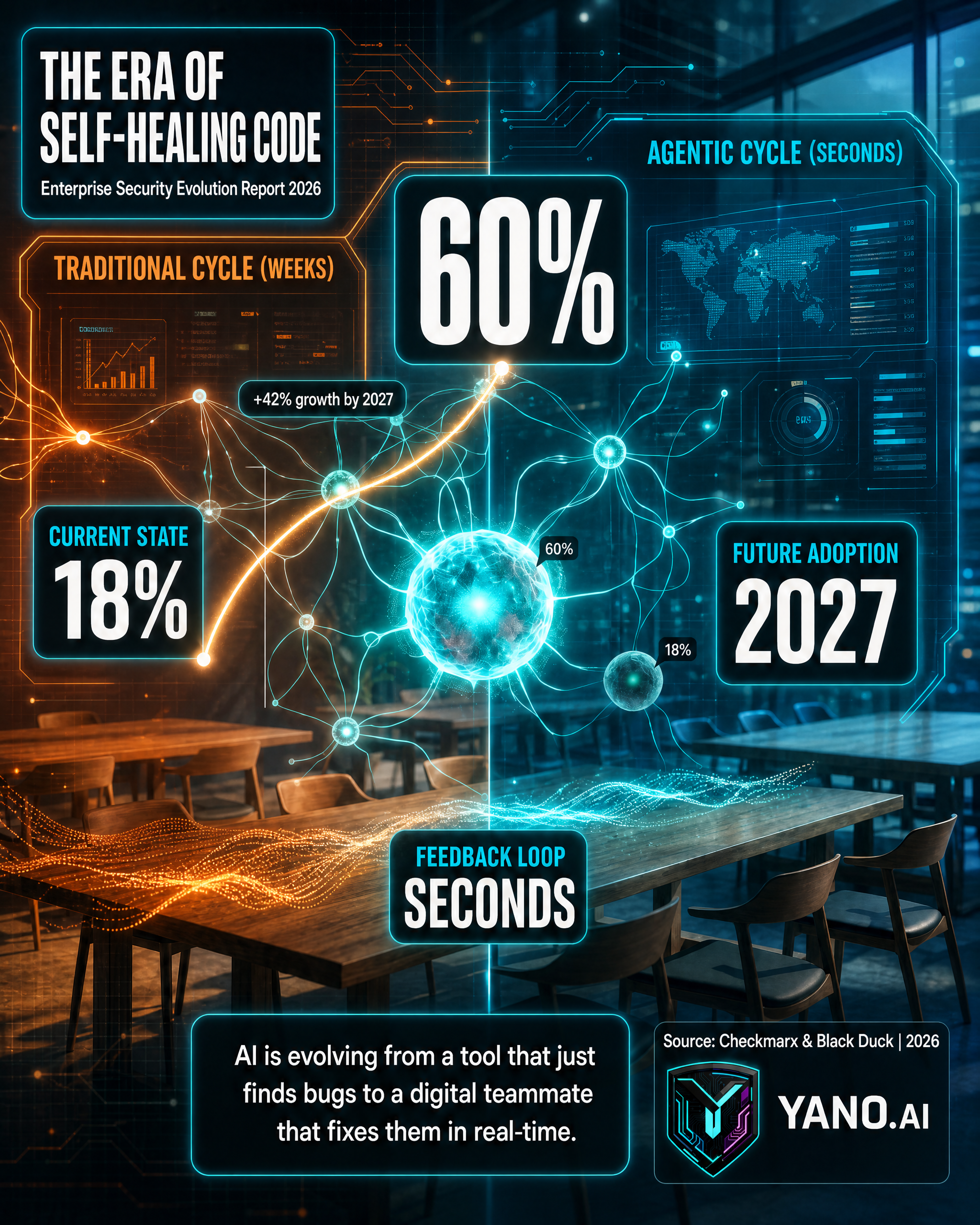
By 2027, three out of five enterprises will deploy autonomous AI agents capable of fixing application security vulnerabilities without human intervention - up from an estimated 18% today. (Source: Checkmarx, 2026) That shift from detection-only to autonomous remediation rewrites the contract between security teams, developers, and the tools they use. It is the biggest change in software security since the move to cloud-native architectures.
Agentic AI cybersecurity refers to systems where machine learning models do more than flag risks. They take governed actions - triaging alerts, enforcing policies, running investigations, and orchestrating remediation workflows. (Source: Checkmarx, 2026) The key difference is the agent can execute steps across a pipeline while keeping humans in control through approval gates and audit trails. This is not about replacing security engineers. It is about scaling what they can do.
The economics behind this shift are hard to ignore. Application security teams are drowning in alert volume from modern CI/CD pipelines. A single enterprise can generate thousands of vulnerability findings per sprint. Agentic AI triages that noise, prioritizes what actually matters, and in many cases patches the code directly. (Source: Black Duck, 2026) The cost of ignoring alerts - a data breach - averages in the millions. The cost of an AI agent that prevents one is a fraction of that.
Here is how these systems work in practice. AI-powered tools scan source code, open-source dependencies, APIs, containers, and infrastructure-as-code configurations across the entire software delivery lifecycle. They detect vulnerabilities, rank them by exploitability and business impact, and generate contextual remediation guidance inside the developer's IDE. (Source: Checkmarx, 2026) Some platforms already execute patches autonomously on low-risk findings using pre-approved guardrails. The agent does the grunt work. The engineer reviews and approves.
The speed advantage is dramatic. Black Duck's Chief Product and Technology Officer Dipto Chakravarty puts it bluntly: "AI will significantly alter how organizations identify and mitigate vulnerabilities, becoming both a tool for attackers and defenders." (Source: Black Duck, 2026) Traditional vulnerability management cycles of weeks or months collapse to hours. Threat actors are already using AI to automate attacks at machine speed. Defenders need the same acceleration just to keep pace.
This creates a double-edged reality for security leaders. CISOs in 2026 face a strategic balancing act - adopting AI-driven defense while managing the risks that AI adoption itself introduces. Gartner notes that cybersecurity is entering a new era driven by rapid AI adoption, evolving threat landscapes, and tightening regulatory pressure. (Source: Gartner, 2026) The question is no longer whether to adopt AI security tools. It is how fast and with what governance framework.
For developers, the impact shows up directly in their daily workflow. Security scanning has moved from a pre-release gate check to continuous inline analysis. Modern tools surface vulnerabilities alongside the code that introduced them, inside the same editor window. (Source: Keyhole Software, 2026) This shift-left approach compresses the feedback loop from weeks to seconds. Developers get instant awareness instead of waiting for a security review bottleneck at the end of the cycle.
The same agentic logic extends beyond application security into IT operations. AIOps - the application of machine learning to infrastructure management - automates monitoring, incident response, and capacity planning. DevOps teams in 2026 adopt AIOps specifically to reduce alert fatigue and improve mean time to resolution. (Source: LinkedIn, 2026) The principle is identical: let machines handle pattern recognition and repetitive work so humans focus on novel exceptions.
Autonomous remediation still has limits. High-severity findings require human judgment. Compliance mandates in sectors like finance and healthcare demand documented human review before production changes go through. (Source: SentinelOne, 2026) The most effective organizations build human-in-the-loop workflows for critical decisions while letting agents handle volume work. This is not a binary choice between full autonomy and no automation. It is a spectrum that each team tunes to its own risk tolerance.
The talent implications are just as significant. Security teams no longer need only traditional AppSec skills. They need engineers who can train, validate, and monitor AI models. They need people who can write effective prompt chains for security agents and design guardrails that keep autonomous systems from making dangerous mistakes. (Source: Black Duck, 2026) The job description for a security engineer in 2027 looks nothing like 2024. Organizations that ignore this skills gap will struggle to keep their AI agents under control.
Keyhole Software's 2026 trend report identifies AI/ML integration as the dominant software development trend of the year, with organizations racing to incorporate models into delivery pipelines. (Source: Keyhole Software, 2026) Security is one domain where these models are already proving their value, but the infrastructure, the guardrails, and the operational playbooks built for AppSec agents will apply across testing, deployment, and monitoring. Early movers in agentic security are building capabilities that will serve their entire engineering organization.
Your development pipeline already has AI-generated code flowing through it. Most security teams are still running manual review cycles designed for a pre-AI world. When your attacker moves at machine speed, can your defense afford to move at human speed?
Sources:
- Checkmarx - Best AI Cybersecurity Providers: Top 6 Options in 2026
- Black Duck - Navigating the AI Security Era: Key Trends for Software Leaders in 2026
- Keyhole Software - Software Development Trends 2026
- SentinelOne - 9 AI Cybersecurity Trends to Watch in 2026
- LinkedIn - DevOps Emerging Trends in 2026: From DevSecOps to AIOps
Sources — external references open in a new tab.